
Cook Islands-led science strengthens deep-sea habitat understanding
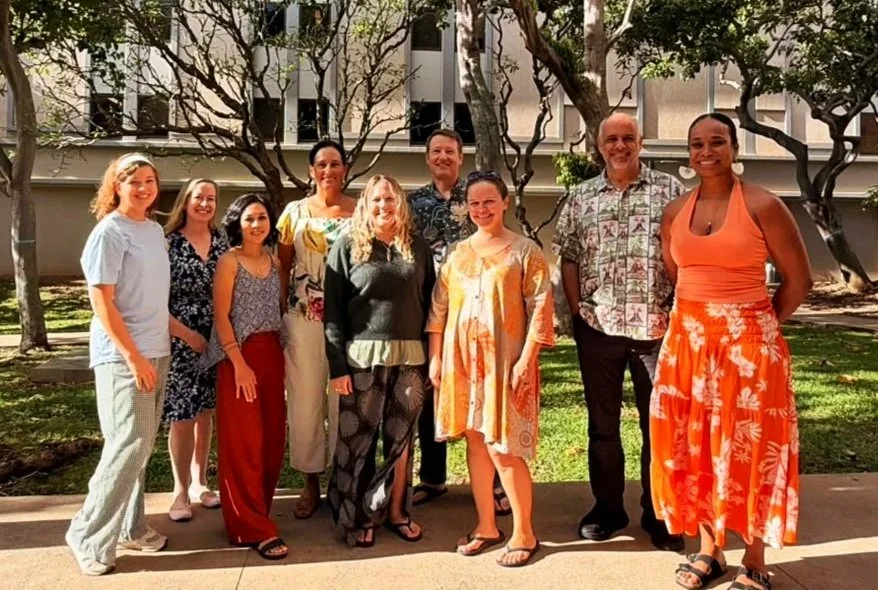
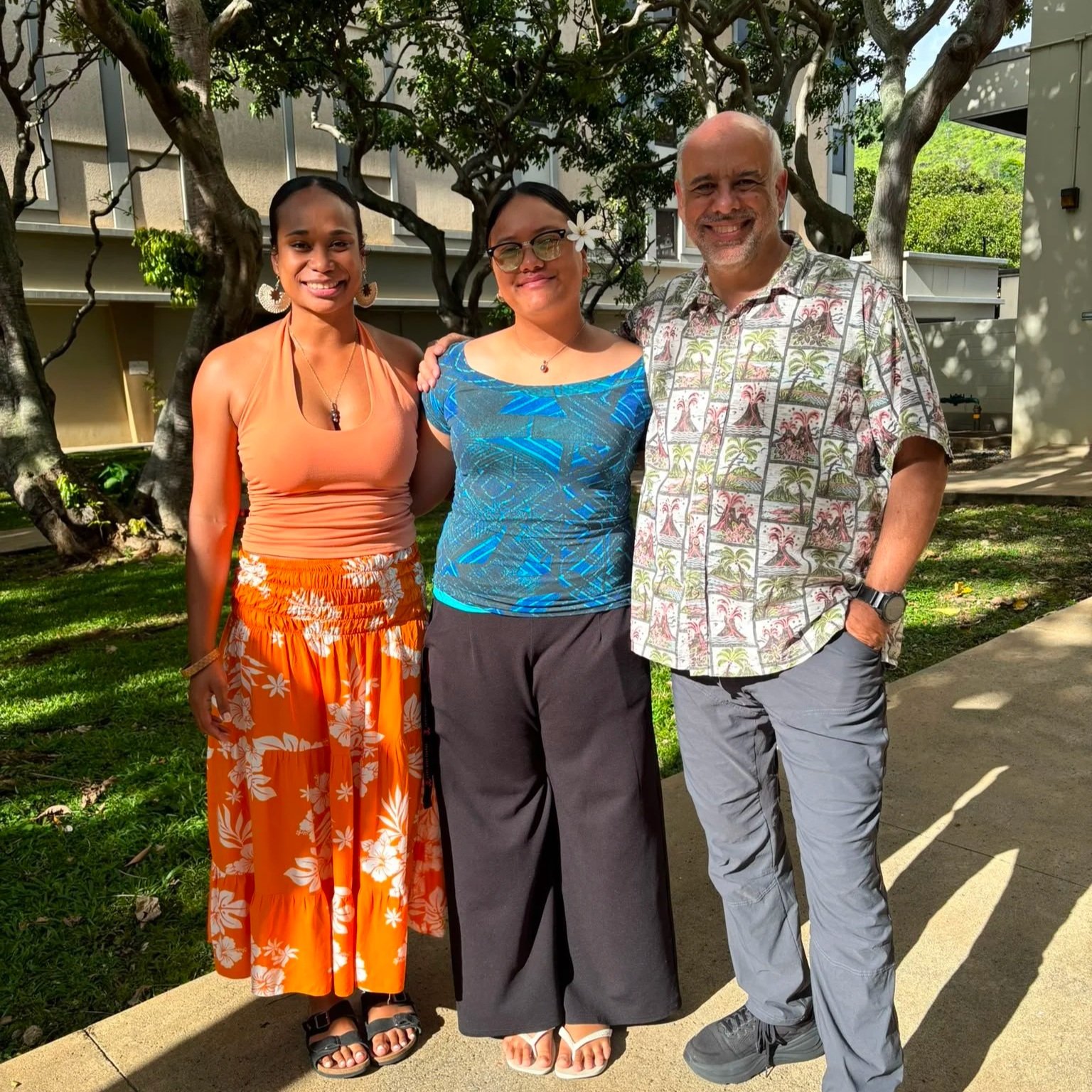
SBMA Knowledge Management staff Chloe-Ane Wragg and Dr John Parianos during their September 2026 science engagement at the University of Hawai‘i at Mānoa.
Cook Islands scientists have completed a major review of more than 11,000 deep-sea observations, working with research partners in Hawai‘i to improve how seabed habitats are classified and analysed for future environmental management.
The work was advanced during meetings at the Deep-sea Animal Research Centre at the University of Hawai‘i at Mānoa in September 2026, where Seabed Minerals Authority (SBMA) Knowledge Management staff Chloe-Ane Wragg and Dr John Parianos presented a revised Cook Islands approach to classifying deep-sea substrates and geological features.
The review builds on scientific information collected during the 2025 Deep-Sea Habitats of the Cook Islands expedition, NA176, which explored a range of deep-sea environments including abyssal plains, seamounts, ridges, troughs and knolls.
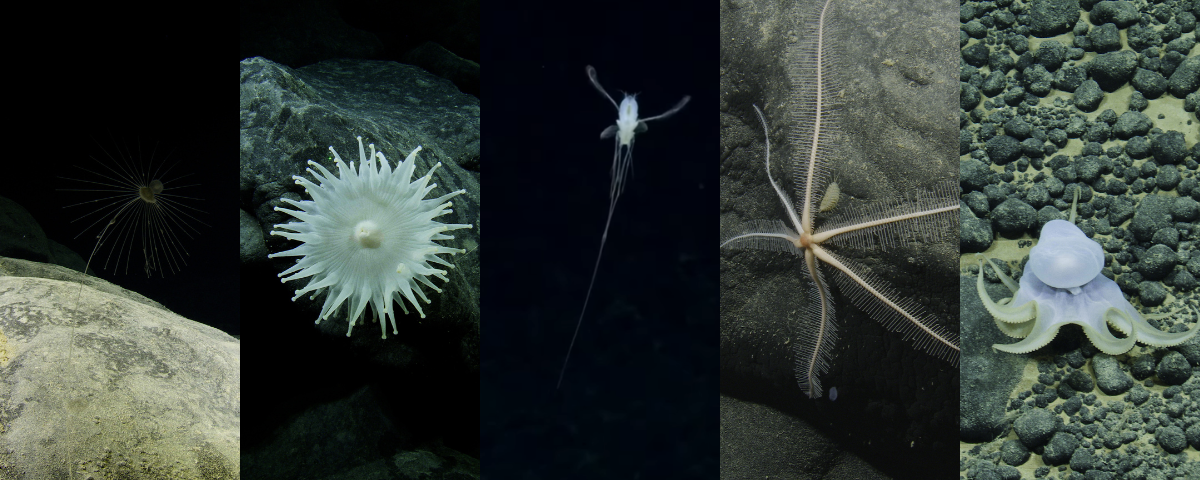
Deep-sea imagery collected during the 2025 NA176 expedition formed part of the dataset reviewed by SBMA scientists.
For SBMA, the work is an important step in turning deep-sea imagery and observations into information that can help the Cook Islands better understand where different habitats occur, how biological communities vary across the seabed, and how environmental management measures can be tested.
A Cook Islands-led review
Following the NA176 expedition in 2025, SBMA reviewed how seabed substrates and geoforms had been classified during scientific post-cruise analysis. This showed that some categories needed to be refined.
To help, SBMA has developed a first version of the Geological Substrate Atlas of the Cook Islands. SBMA continued its practice of using leading standards by drawing on the internationally recognised NOAA Coastal and Marine Ecological Classification Standard (CMECS) and adapting it for the deep-sea environments of the Cook Islands.
SBMA then revised more than 11,000 observations from the NA176 cruise before presenting the work to scientific partners in Hawai‘i.
Senior Technical Officer Chloe-Ane Wragg said careful classification is a critical part of building reliable environmental knowledge.
“Collecting deep-sea imagery is only the first step. The observations need to be classified consistently so we can compare different habitats, understand where biological communities occur and identify where more information may still be needed.”
“We completed a significant piece of work, that gives us a stronger foundation for the scientific analysis that comes next.”
Understanding what lives where
Just like our islands, the deep seabed is made differently in different places, and sometimes that means different types of animals are found. Geoforms are the larger features (like for example a seamount) and substrates the smaller (like for example gravel versus mud cover on the seabed).
The NA176 cruise in 2025 was designed to produce a good dataset to test how different geoforms and substrates naturally affect biodiversity. A distinctly different combination of life and substrate/geoform is called a habitat-type.
Dr Parianos said the work is about making sure environmental management is supported by information that can stand up to critical scientific review.
“If development proceeds beyond exploration, we have the goal to ensure that each and every type of habitat is either protected or conserved. To do that we need to understand where these different habitat-types are… and to do that, the underlying information needs to be consistent and reliable.”
Partners agree on the next steps
During the Hawai‘i meetings, SBMA worked with scientists from the University of Hawai‘i, NOAA and the United States Geological Survey to agree on future analysis.
It is apparent that this type of approach has long been needed for deep sea (abyssal plain environments).
The discussions established a practical way forward to make potentially a very valuable contribution to our scientific understanding of this part of our planet.
Sharing Cook Islands science
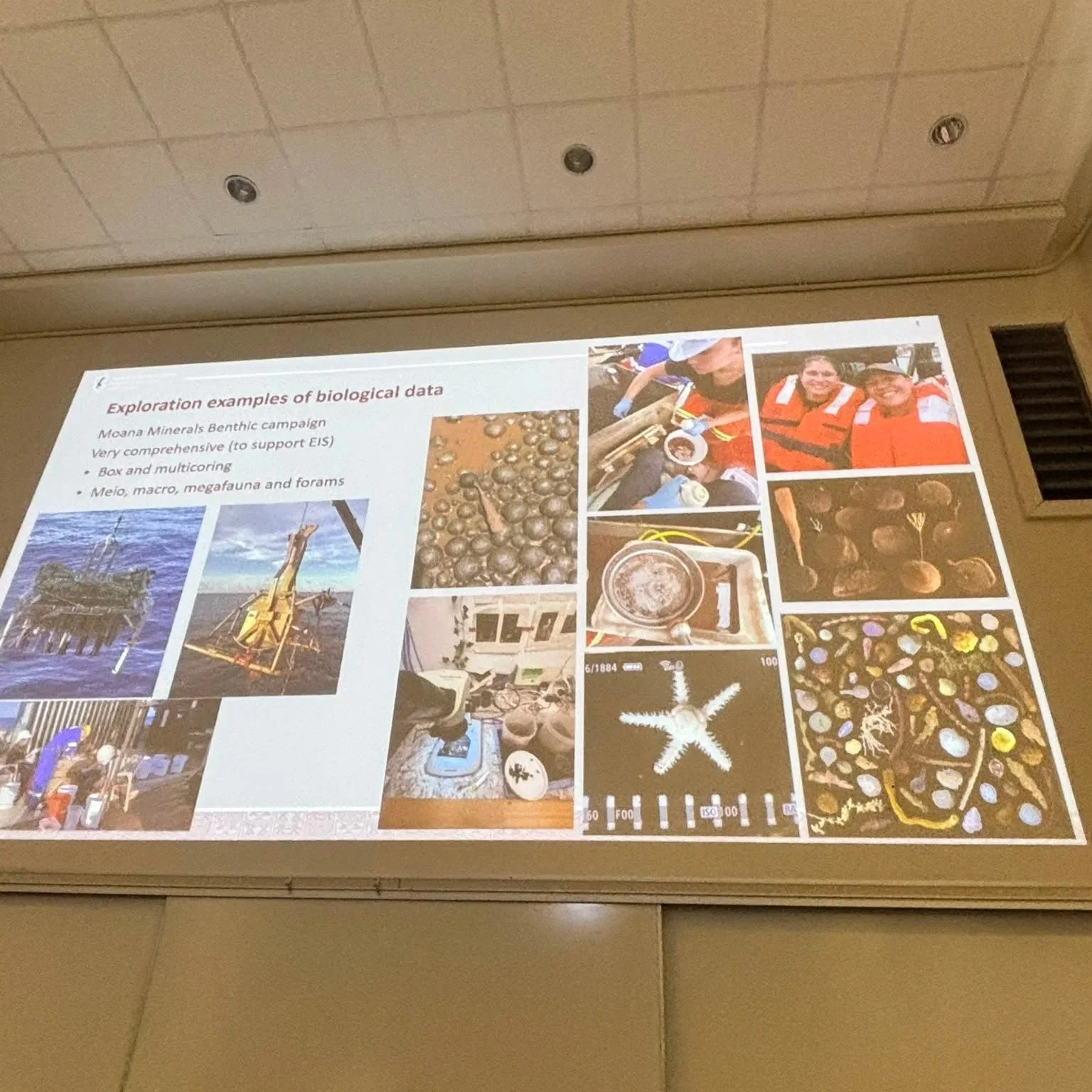
As part of the visit, SBMA also presented a public seminar at the University of Hawai‘i School of Marine Sciences on current scientific questions and recent advances in understanding the Cook Islands' deep-sea environment.
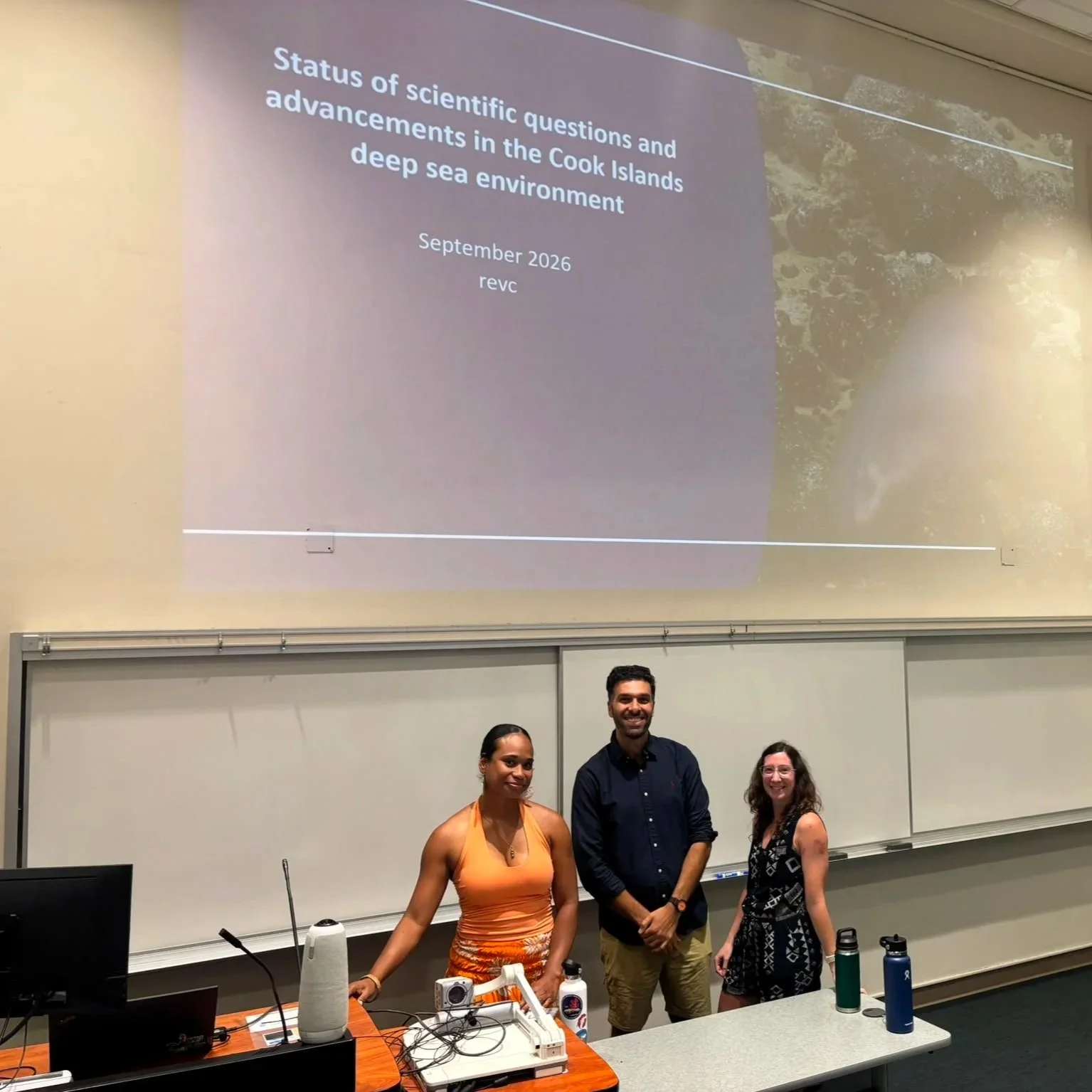
Around 20 to 30 participants from a range of scientific backgrounds attended the session.
Ms Wragg said the seminar provided an opportunity to share Cook Islands research priorities directly with scientists working in related fields.
“It was important for us to present the work from a Cook Islands perspective and explain the scientific questions that matter for our own ocean management approach.”
“These partnerships are most useful when knowledge moves both ways and when the work strengthens the systems and understanding we are building here at home.”
The visit also provided an opportunity for SBMA staff to meet University of Hawai‘i researchers and connect with a Cook Islands student studying at the university.
Science before decisions
Seabed Minerals Commissioner Beverly Ataera said the work reflects SBMA’s responsibility to make sure information collected from Cook Islands waters is carefully reviewed, understood and used appropriately.
“Our responsibility is not simply to collect more data. We need to make sure that information is accurate, understood and useful for the decisions the Cook Islands face in the future.”
“This work shows our team doing that — checking the science, improving how information is classified and working with our partners to strengthen the evidence available for responsible ocean management.”
The Cook Islands remains in the exploration and research phase of seabed minerals activity.
No commercial minerals harvesting has been permitted.
For SBMA, the purpose is clear: understand the environment first, test the evidence carefully, and keep Cook Islanders directly involved in the science that informs decisions about our moana.
Stay Informed
For SBMA news, research, publications, events and public consultation notices, visit our website or follow us on Facebook. To receive our quarterly newsletter, email us.
Visit the SBMA website | Follow SBMA on Facebook | Request the Newsletter
For further information or media queries, please contact: sbma.media@cookislands.gov.ck